
For many of us who have faced cancer and its treatments, fitness has been more than just physical—it’s been part of our identity. It’s how we cope, how we feel alive, and how we prove to ourselves that we’re still capable.
So when immunotherapy leaves you with adrenal insufficiency, the shift can feel not just physical… but deeply personal.
This is something I know resonates with many in our community.
What is happening to your body?
Immune-related adrenal insufficiency occurs when treatment affects the body’s ability to produce cortisol—a hormone essential for energy, recovery, and responding to stress.

And exercise? That’s a form of stress.
Without enough cortisol, the body struggles to keep up with demands that once felt routine.
The shock of the change
If you were previously very fit, the difference can be stark:
Workouts that once felt easy suddenly feel exhausting. Legs feel heavy, even at low intensity. Recovery takes much longer. Energy levels become unpredictable.
This isn’t deconditioning. It isn’t a lack of effort.
It’s physiological – understanding that is a crucial step forward.
When pushing harder doesn’t work
Most of us who’ve trained regularly are used to one mindset:
Push through💪💪💪
But with adrenal insufficiency, pushing through can backfire.
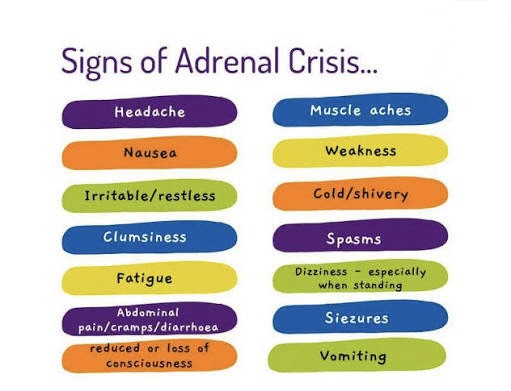
Overdoing it can leave you wiped out for days, not hours. In more serious cases, it can even lead to an adrenal crisis—a medical emergency.
Learning to step back is not weakness – it’s survival
The mental battle

This is often the hardest part.
There’s a quiet grief in:
Not recognising your own fitness level. Comparing yourself to “before”. Feeling like your body has let you down.
But the truth is, your body hasn’t failed you—it’s adapting to a completely new set of rules.
Finding your new baseline
With the right medication and management, things do improve.
Energy can stabilise,strength can return and confidence can rebuild.
But it requires a shift in approach.
1. Train with your energy, not against it.
Some days you’ll feel good—embrace those.
Other days, scaling back is the win.
2. Timing matters
Many people find they perform best when their medication is at peak effectiveness. Learning your own rhythm can make a big difference.
3. Progress looks different now
It’s less about personal bests and more about:
Consistency Enjoyment Staying active without setbacks
4. Recovery is part of training
Rest days are no longer optional—they’re essential.
What fitness can still look like
This isn’t the end of being active.
Far from it.
Many people with adrenal insufficiency return to:
- Walking
- Hiking
- Cycling
- Swimming, and
- Strength training
Even endurance challenges are still possible—with planning, patience, and respect for the condition. I must admit the notion of climbing Kilimanjaro or Toubkal again absolutely fill me with a new kind of dread.
Even a few games of table tennis can rest in the need to take stock and rest up!


A different kind of strength
There’s a new strength that develops through all of this.
Not the kind measured in miles or weights—but in awareness, discipline, and resilience.
- Learning when to stop.
- Learning when to rest.
- Learning how to keep going—differently.
Final thoughts
If you’re struggling with the change, know this:
You’re not lazy.
You’re not losing your edge.
You’re adapting to a body that now needs a different kind of care.
And that takes strength.

At Muttleymelanoma, I talk a lot about living life fully.
Sometimes that means climbing mountains.
Sometimes it means learning how to walk a different path—and still finding purpose, challenge, and joy along the way.
One Life… LOVE IT… LIVE IT.
