
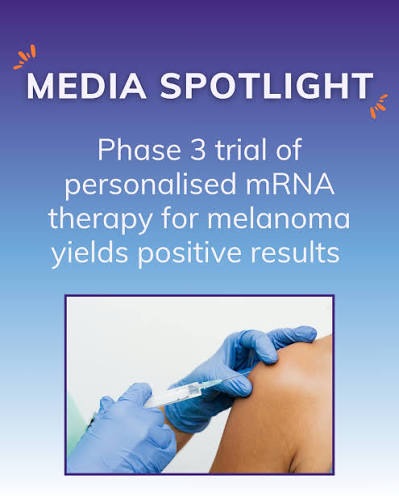

For many people, the term mRNA vaccine became familiar during the COVID-19 pandemic. Now, the same groundbreaking technology is being used in a very different battle – helping the immune system recognise and attack melanoma cells. One of the most exciting developments in recent years is Intismeran autogene (also known as V940 or mRNA-4157), a personalised cancer vaccine being developed by Moderna and Merck.
While Intismeran is not yet widely available, recent clinical trial results have generated significant optimism among melanoma specialists and patient advocates alike.
What is Intismeran?
Unlike traditional vaccines that are designed to prevent infectious diseases, Intismeran is a therapeutic cancer vaccine. It is intended to help the body’s immune system find and destroy any remaining melanoma cells after surgery.
What makes Intismeran unique is that it is created specifically for each patient. After a melanoma tumour is removed, scientists analyse its genetic makeup and identify mutations that are unique to that individual’s cancer. The vaccine is then custom-built to target those mutations.
In effect, every patient receives their own bespoke vaccine.
How does the mRNA technology work?

The technology behind Intismeran is similar to that used in some COVID-19 vaccines. Both use messenger RNA (mRNA) – genetic instructions that tell cells how to make specific proteins.
However, there is a crucial difference.
COVID vaccines teach the immune system to recognise a virus. Intismeran teaches the immune system to recognise proteins associated with an individual’s melanoma. The vaccine contains mRNA encoding up to 34 tumour-specific neoantigens – proteins produced by mutations found within the patient’s cancer.
Once injected, the body’s cells produce these proteins temporarily, allowing immune cells to identify them as targets. The immune system can then seek out and attack melanoma cells carrying the same markers.
Why combine it with Keytruda?
Current studies have paired Intismeran with Keytruda (pembrolizumab), a well-established immunotherapy drug used to treat melanoma. Keytruda works by releasing the “brakes” on the immune system, enabling T-cells to attack cancer more effectively.
The theory is simple:
- Intismeran helps the immune system identify what to attack.
- Keytruda helps immune cells launch a stronger attack.
Together, they may provide a more powerful defence against melanoma recurrence.
Professor Georgina Long AO led the landmark Phase 3 INTerpath-001 clinical trial evaluating intismeran(also known as intismeran autogene, V940, or mRNA-4157), a personalized mRNA-based therapeutic cancer vaccine developed by Merck and Moderna.

Professor Georgina Long
- Combination Therapy: Intismeran is given alongside the checkpoint inhibitor pembrolizumab (Keytruda) for patients with resected high-risk melanoma.
- Recurrence Reduction: Adding intismeran to pembrolizumab reduced the risk of melanoma recurrence or death by 42% (hazard ratio 0.58) compared to pembrolizumab alone.
- Personalised Approach: The vaccine is custom-built by sequencing a patient’s tumor genome, identifying unique mutations (neoantigens), and teaching the immune system to recognize and destroy remaining cancer cells.
- Role: Professor Long serves as the global Principal Investigator for the trial, Chair of the Trial Steering Committee, and Chair of Melanoma Medical Oncology and Translational Research at the University of Sydney
What have the trials shown?
The most encouraging news came from a large Phase 3 melanoma trial involving more than 1,100 patients with high-risk Stage IIB to Stage IV melanoma that had been surgically removed.
Patients received either:
- Keytruda alone, or
- Keytruda plus personalised Intismeran.
The results were impressive:
- The combination reduced the risk of melanoma recurrence or death by 42% compared with Keytruda alone.
Two-year recurrence-free survival was reported at approximately 82% in the combined-treatment group, compared with around 70% for Keytruda alone.
Earlier studies have also suggested long-lasting benefits, with data showing sustained reductions in recurrence risk over several years of follow-up.
These findings represent the first successful Phase 3 result for an individualised mRNA cancer vaccine.
Is Intismeran available now?
Not yet.
Although the trial results are extremely promising, Intismeran remains an investigational treatment. Regulatory submissions and reviews are still required before it can become routinely available to patients. Moderna and Merck have stated that they are working with health authorities regarding potential approval pathways.
What does this mean for melanoma patients?
It is important to be realistic. Intismeran is not currently a cure for melanoma, and it will not be suitable for every patient.
However, it represents something genuinely new: a treatment designed specifically around the biology of an individual’s cancer. Rather than taking a one-size-fits-all approach, personalised vaccines could allow doctors to train each patient’s immune system against the exact mutations driving their disease.
For the melanoma community, this development provides real hope that recurrence rates can be reduced and long-term outcomes improved. It also opens the door to similar personalised vaccines for lung, kidney, pancreatic and other cancers in the future.
Looking Ahead
The success of Intismeran highlights how rapidly melanoma treatment continues to evolve. Just a decade ago, the idea of using personalised mRNA technology to help prevent cancer recurrence seemed futuristic. Today, it is moving closer to becoming clinical reality.
For melanoma patients, carers and advocates, that is a powerful reminder that research matters—and that every breakthrough brings us one step closer to better outcomes and longer, healthier lives.
Remember- melanoma treatment is evolving at such a rapid pace which is brilliant news for all of those affected by this disease.
In the meantime …
One Life … Live it … Love it.
