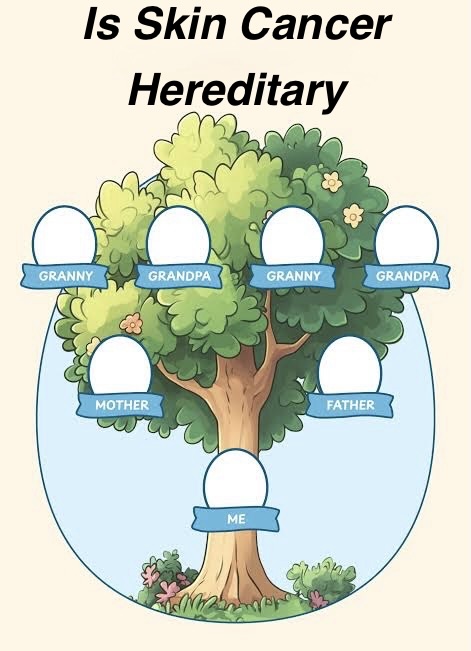
Is Melanoma Hereditary? What My Own Experiences Have Taught Me

Can melanoma run in families?

It’s a question I’ve thought about more as my own melanoma journey has unfolded.

When we talk about melanoma, most of the conversation quite rightly centres around UV exposure — sunshine, sunburn, sunbeds and protecting our skin.

But there is another part of the story that perhaps receives less attention.

Our genes.

And, particularly for someone like me who has lived with melanoma for more than a decade, understanding the difference between genetic melanoma and hereditary melanoma is important.

Is melanoma actually hereditary?

The short answer is:

Sometimes — but most melanomas are not caused by an inherited high-risk gene variant.

Cancer Research UK estimates that around 10% of melanoma cases may be linked to an inherited gene change, and having a close relative who has had melanoma increases your own risk. (Cancer Research UK⁠)

One of the best-known genes associated with familial melanoma is CDKN2A.

Other inherited variants, including CDK4, BAP1 and MITF, have also been associated with increased melanoma susceptibility. (Cancer.gov⁠)

But there is an important distinction.

Every melanoma contains genetic changes within the cancer cells. That doesn’t mean those changes were inherited from Mum or Dad.

An inherited — or germline — variant is something present from birth and potentially passed through generations. If a parent carries certain inherited cancer-predisposition variants, each child may have a 50% chance of inheriting that particular variant, although inheriting it does not mean that person will definitely develop cancer. (Cancer Research UK⁠)

That distinction matters enormously.

My melanoma story

My own relationship with melanoma began in 2013, when I was 49.

A mole on my back changed.

Thankfully, I noticed it and did something about it.

It was melanoma.

At that point it was treated surgically and I was initially diagnosed at Stage I. Like many people, I hoped that would be the end of the story.

Unfortunately, melanoma had other ideas.

In 2017, I discovered a lump in my armpit. The melanoma had returned and I was now Stage III. I underwent an axillary lymph-node clearance.

Then came 2021.

The melanoma returned again, this time having spread to my pancreas.

Stage IV.

I underwent major surgery in which around 90% of my pancreas and all of my spleen were removed, followed by a year of immunotherapy.

For a wonderful period afterwards, I reached those three letters that mean so much to anyone living with metastatic cancer:

NED — No Evidence of Disease.

But my melanoma story still wasn’t finished.

In 2025 it returned again, with disease involving my small bowel. Once again I found myself facing Stage IV melanoma.

Treatment this time involved ipilimumab and nivolumab — IPI-NIVO — followed by nivolumab alone after significant immune-related side effects.

And then came another extraordinary moment.

My scan showed no measurable disease.

After everything melanoma had thrown at me, treatment had once again produced a remarkable response.

So was mine hereditary?

That’s where I think my own story illustrates an important point.

Having melanoma — even recurrent or metastatic melanoma — does not, by itself, prove that someone has hereditary melanoma.

Neither does having a mutation such as BRAF within the tumour necessarily mean that mutation was inherited. Tumour mutations and inherited germline variants are different things.

Doctors become particularly interested in inherited susceptibility when there is a pattern: several close relatives with melanoma, melanoma occurring unusually young, somebody developing multiple separate primary melanomas, or combinations of melanoma and certain other cancers within a family. The National Cancer Institute notes that genes such as CDKN2A are particularly important in families with multiple melanoma cases. (Cancer.gov⁠)

That is very different from saying:

“I’ve had melanoma, therefore my children or grandchildren will get melanoma.”

They won’t necessarily.

But my experience has made me think differently about what we pass on to the next generation.

Because there’s something else I can pass on.

Knowledge.

What I wish I’d understood when I was younger

Sunburn is not clever – it’s just plain silly

I was burned by the sun when I was young.

Like so many people of my generation, we simply didn’t understand UV radiation in the way we do today.

Sunburn was almost regarded as part of growing up.

You got burned.

You peeled.

You went brown.

And you carried on.

We now understand that sunburn represents damage to the skin, and repeated UV exposure contributes to the DNA damage that can ultimately lead to melanoma. (Cancer.gov⁠)

Genetics and environment aren’t necessarily competing explanations either.

Someone can inherit greater susceptibility and experience environmental exposures that influence their risk.

That’s why family history should make us more vigilant — not frightened.

What I want my family to inherit from me

I’ve lived with melanoma since 2013.

I’ve progressed from Stage I to Stage III and eventually Stage IV.

I’ve undergone major operations, lost most of my pancreas and my spleen, experienced immunotherapy and some of its considerable side effects, lived through scan after scan and heard both devastating and wonderful news in consulting rooms.

Melanoma has accompanied me through an enormous part of my adult life.

So naturally I think about my children.

And now I think about my grandchildren too.

I can’t rewrite my DNA.

I can’t change the childhood sunburns I experienced.

And I can’t know exactly why one particular cell in one particular mole on my back eventually became melanoma.

But I can change what the generations after me know about melanoma.

That might be one of the most important things I leave them.

Know your skin.

Know what is normal for you.

Understand the ABCDE warning signs.

Protect children from excessive UV exposure.

Don’t deliberately burn.

Don’t assume a tan means healthy skin.

And if a mole changes — get it checked.

If several people in your family have experienced melanoma, particularly at younger ages, speak to your GP or medical team about whether your family history warrants specialist assessment or genetic counselling. Cancer Research UK advises discussing a strong family cancer history with a GP, who can refer to a genetics service when appropriate. (Cancer Research UK⁠)

Hereditary doesn’t mean inevitable

Perhaps that’s the message I most want people to remember.

Genes can influence risk.

Family history can influence risk.

Skin type can influence risk.

UV exposure can influence risk.

But risk isn’t destiny.

Knowing that melanoma exists within a family shouldn’t create fear. It should create awareness.

My melanoma experience began with a changing mole on my back in 2013.

I couldn’t possibly have imagined where that would take me — through four encounters with melanoma, major surgery, Stage IV disease, immunotherapy, incredible responses to treatment, fundraising, advocacy, speaking publicly and eventually creating MuttleyMelanoma.

Tackle the experiences – head on!

If my experiences can help another family talk about melanoma, encourage someone to check their skin, persuade a parent to protect their child from unnecessary UV exposure, or prompt somebody to show a changing mole to their GP, then something positive has come from everything I’ve been through.

Maybe melanoma isn’t the inheritance we should be concentrating on.

Maybe the inheritance that matters is awareness.

Pass that on.

One Life… LOVE IT… LIVE IT.

Can melanoma run in families?

It’s a question I’ve thought about more as my own melanoma journey has unfolded.

When we talk about melanoma, most of the conversation quite rightly centres around UV exposure — sunshine, sunburn, sunbeds and protecting our skin.

But there is another part of the story that perhaps receives less attention.

Our genes.

And, particularly for someone like me who has lived with melanoma for more than a decade, understanding the difference between genetic melanoma and hereditary melanoma is important.

Is melanoma actually hereditary?

The short answer is:

Sometimes — but most melanomas are not caused by an inherited high-risk gene variant.

Cancer Research UK estimates that around 10% of melanoma cases may be linked to an inherited gene change, and having a close relative who has had melanoma increases your own risk. (Cancer Research UK⁠)

One of the best-known genes associated with familial melanoma is CDKN2A.

Other inherited variants, including CDK4, BAP1 and MITF, have also been associated with increased melanoma susceptibility. (Cancer.gov⁠)

But there is an important distinction.

Every melanoma contains genetic changes within the cancer cells. That doesn’t mean those changes were inherited from Mum or Dad.

An inherited — or germline — variant is something present from birth and potentially passed through generations. If a parent carries certain inherited cancer-predisposition variants, each child may have a 50% chance of inheriting that particular variant, although inheriting it does not mean that person will definitely develop cancer. (Cancer Research UK⁠)

That distinction matters enormously.

My melanoma story

My own relationship with melanoma began in 2013, when I was 49.

A mole on my back changed.

Thankfully, I noticed it and did something about it.

It was melanoma.

At that point it was treated surgically and I was initially diagnosed at Stage I. Like many people, I hoped that would be the end of the story.

Unfortunately, melanoma had other ideas.

In 2017, I discovered a lump in my armpit. The melanoma had returned and I was now Stage III. I underwent an axillary lymph-node clearance.

Then came 2021.

The melanoma returned again, this time having spread to my pancreas.

Stage IV.

I underwent major surgery in which around 90% of my pancreas and all of my spleen were removed, followed by a year of immunotherapy.

For a wonderful period afterwards, I reached those three letters that mean so much to anyone living with metastatic cancer:

NED — No Evidence of Disease.

But my melanoma story still wasn’t finished.

In 2025 it returned again, with disease involving my small bowel. Once again I found myself facing Stage IV melanoma.

Treatment this time involved ipilimumab and nivolumab — IPI-NIVO — followed by nivolumab alone after significant immune-related side effects.

And then came another extraordinary moment.

My scan showed no measurable disease.

After everything melanoma had thrown at me, treatment had once again produced a remarkable response.

So was mine hereditary?

That’s where I think my own story illustrates an important point.

Having melanoma — even recurrent or metastatic melanoma — does not, by itself, prove that someone has hereditary melanoma.

Neither does having a mutation such as BRAF within the tumour necessarily mean that mutation was inherited. Tumour mutations and inherited germline variants are different things.

Doctors become particularly interested in inherited susceptibility when there is a pattern: several close relatives with melanoma, melanoma occurring unusually young, somebody developing multiple separate primary melanomas, or combinations of melanoma and certain other cancers within a family. The National Cancer Institute notes that genes such as CDKN2A are particularly important in families with multiple melanoma cases. (Cancer.gov⁠)

That is very different from saying:

“I’ve had melanoma, therefore my children or grandchildren will get melanoma.”

They won’t necessarily.

But my experience has made me think differently about what we pass on to the next generation.

Because there’s something else I can pass on.

Knowledge.

What I wish I’d understood when I was younger

Sunburn is not clever – it’s just plain silly

I was burned by the sun when I was young.

Like so many people of my generation, we simply didn’t understand UV radiation in the way we do today.

Sunburn was almost regarded as part of growing up.

You got burned.

You peeled.

You went brown.

And you carried on.

We now understand that sunburn represents damage to the skin, and repeated UV exposure contributes to the DNA damage that can ultimately lead to melanoma. (Cancer.gov⁠)

Genetics and environment aren’t necessarily competing explanations either.

Someone can inherit greater susceptibility and experience environmental exposures that influence their risk.

That’s why family history should make us more vigilant — not frightened.

What I want my family to inherit from me

I’ve lived with melanoma since 2013.

I’ve progressed from Stage I to Stage III and eventually Stage IV.

I’ve undergone major operations, lost most of my pancreas and my spleen, experienced immunotherapy and some of its considerable side effects, lived through scan after scan and heard both devastating and wonderful news in consulting rooms.

Melanoma has accompanied me through an enormous part of my adult life.

So naturally I think about my children.

And now I think about my grandchildren too.

I can’t rewrite my DNA.

I can’t change the childhood sunburns I experienced.

And I can’t know exactly why one particular cell in one particular mole on my back eventually became melanoma.

But I can change what the generations after me know about melanoma.

That might be one of the most important things I leave them.

Know your skin.

Know what is normal for you.

Understand the ABCDE warning signs.

Protect children from excessive UV exposure.

Don’t deliberately burn.

Don’t assume a tan means healthy skin.

And if a mole changes — get it checked.

If several people in your family have experienced melanoma, particularly at younger ages, speak to your GP or medical team about whether your family history warrants specialist assessment or genetic counselling. Cancer Research UK advises discussing a strong family cancer history with a GP, who can refer to a genetics service when appropriate. (Cancer Research UK⁠)

Hereditary doesn’t mean inevitable

Perhaps that’s the message I most want people to remember.

Genes can influence risk.

Family history can influence risk.

Skin type can influence risk.

UV exposure can influence risk.

But risk isn’t destiny.

Knowing that melanoma exists within a family shouldn’t create fear. It should create awareness.

My melanoma experience began with a changing mole on my back in 2013.

I couldn’t possibly have imagined where that would take me — through four encounters with melanoma, major surgery, Stage IV disease, immunotherapy, incredible responses to treatment, fundraising, advocacy, speaking publicly and eventually creating MuttleyMelanoma.

Tackle the experiences – head on!

If my experiences can help another family talk about melanoma, encourage someone to check their skin, persuade a parent to protect their child from unnecessary UV exposure, or prompt somebody to show a changing mole to their GP, then something positive has come from everything I’ve been through.

Maybe melanoma isn’t the inheritance we should be concentrating on.

Maybe the inheritance that matters is awareness.

Pass that on.

One Life… LOVE IT… LIVE IT.


2 responses to “Is Melanoma Hereditary? What My Own Experiences Have Taught Me”

  1. Emma Gleave avatar
    Emma Gleave

    Such an inspiration! So very insightful and educational especially for those of us who are relatively new to this experience. Stay well 🥰

    1. Muttleymelanoma avatar

      Thank you Emma – please feel free to share the blog with friends and family. Getting the message out about melanoma is so very important.
      Watch out for more updates – there will be more to come. Of that I’m sure.

Comments and questions are always welcome. Please feel free to add yours.

Discover more from Muttley Melanoma

Subscribe now to keep reading and get access to the full archive.

Continue reading