
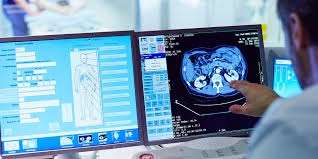

Oncologists use different types of X-ray and scan imaging for cancer diagnosis because each method provides unique information that helps in detecting, staging, and planning treatment. The choice of imaging depends on several factors, including the type of cancer, its location, size, and whether it has spread. Here’s why different imaging techniques are used:
1. To Identify Tumors and Abnormal Growths
• X-rays are quick and effective for detecting lung cancer, bone tumors, and fractures caused by cancer.
• CT scans provide detailed cross-sectional images to locate tumors more precisely.
• MRI scans offer high-resolution images of soft tissues, making them ideal for brain, spinal cord, and muscle tumors.
2. To Determine if Cancer Has Spread (Staging)
• PET scans detect metabolic activity, highlighting cancerous cells even before they form a mass.
• Bone scans identify if cancer has spread to the bones, common in prostate and breast cancer.
3. To Guide Biopsies and Treatment
• Ultrasound helps guide needle biopsies for suspected tumors.
• CT or MRI scans help plan surgeries and radiotherapy by mapping out tumor size and location.
4. To Monitor Treatment Effectiveness
• If a patient is undergoing chemotherapy, radiotherapy, or immunotherapy, oncologists use CT, PET, or MRI scans to track whether the tumor is shrinking, stable, or growing.
5. To Minimize Radiation Exposure and Choose the Safest Method
• MRI and ultrasound do not use radiation, so they are preferred for repeated imaging or in younger patients.
• CT and PET scans, while using radiation, are often necessary for detailed internal imaging.
Each imaging technique plays a role in the overall cancer management strategy. Oncologists often combine multiple scans (e.g., PET-CT or MRI with contrast) to get a clearer picture of the disease.
Hospitals use various types of X-rays and scans to detect, diagnose, and monitor cancer. Here are the main imaging techniques:
More …….,
1. X-rays
• Standard X-ray – Used for detecting tumors, fractures, or fluid buildup (e.g., in the lungs).
• Mammogram – A specialized X-ray for detecting breast cancer.
2. CT Scan (Computed Tomography)
• Uses multiple X-ray images to create detailed cross-sectional images of the body.
• Often used to detect tumors, check if cancer has spread, and guide biopsies.
• Sometimes involves contrast dye for better imaging.
3. MRI (Magnetic Resonance Imaging)

Uses strong magnets and radio waves to create detailed images of soft tissues.
• Often used for brain, spinal cord, and soft tissue tumors.
• No radiation involved, but takes longer than a CT scan.
4. PET Scan (Positron Emission Tomography)

• Uses a small amount of radioactive sugar (FDG) to detect active cancer cells.
• Often combined with a CT scan (PET-CT) for more precise tumor detection.
• Commonly used for staging and monitoring treatment response.
5. Ultrasound
• Uses sound waves to create images of organs and soft tissues.
• Often used for liver, thyroid, and ovarian cancers or guiding biopsies.
6. Bone Scan
• Uses a small amount of radioactive tracer to detect bone metastases.
• Often used for cancers that spread to bones, like prostate or breast cancer.
7. Nuclear Medicine Scans
• Thyroid Scan – Uses radioactive iodine to detect thyroid tumors.
• Gallium Scan – Detects certain types of lymphoma and infection.
• MIBG Scan – Detects rare neuroendocrine tumors.
Each scan has specific uses, and doctors often combine multiple imaging techniques for an accurate diagnosis and treatment plan.
In summary there are so many different incredible ways that your team can firstly diagnose the exact nature of the cancer, they can then devise a treatment plan specifically for your own requirements and they can then monitor the effectiveness of the treatment and amend it if required.
